 Shandong Keyuan
Capabilities
Equipment, tolerances, finishes.
Everything below runs on our own floor in Anqiu. The figures are what we hold in production, not catalogue maxima.
Laser cutting
±0.03 mm, first part to last.
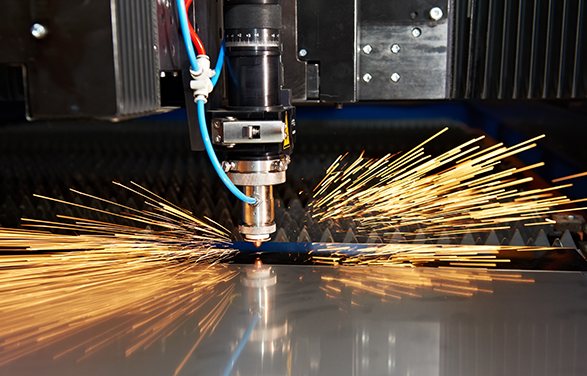
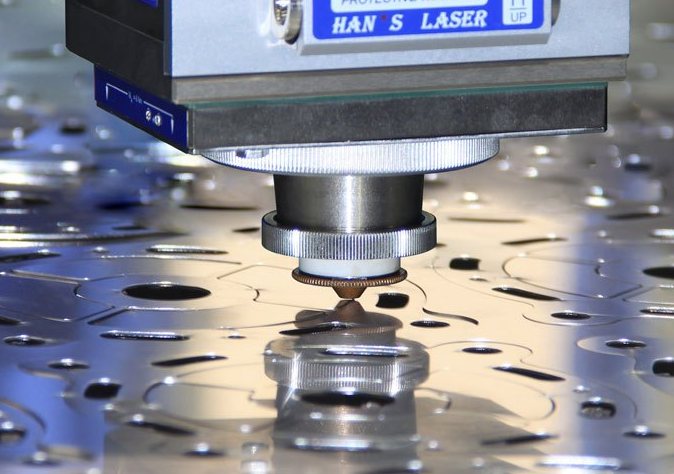
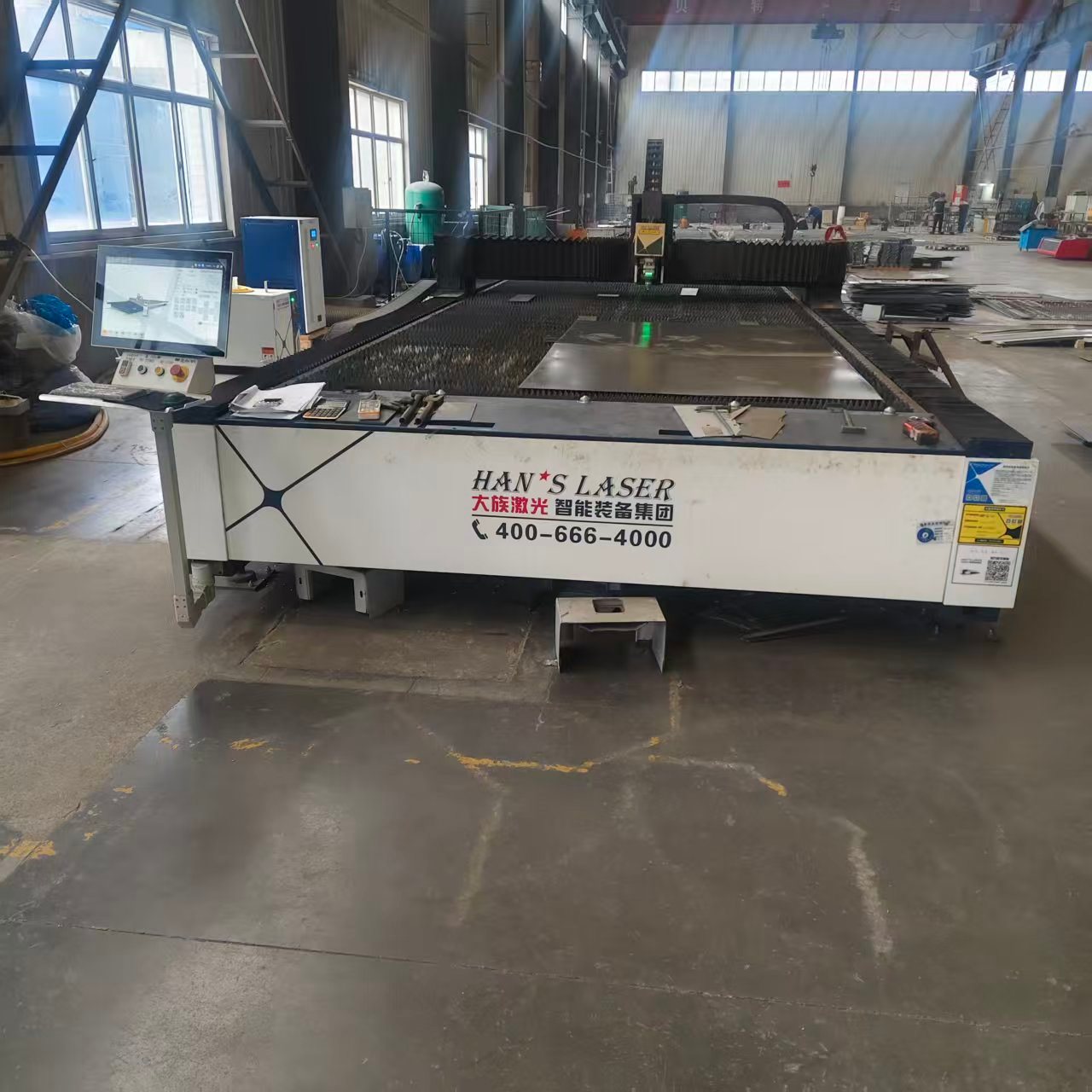
Fibre-laser cutting of carbon steel, stainless and aluminium sheet on Han's Laser flatbed machines. Narrow kerf, burr-free edges — most parts skip secondary deburring entirely.
Thermal control
Thin gauge stays flat.
Minimal heat input means thin-gauge, stainless and aluminium blanks come off without warp, so bend and assembly dimensions stay consistent downstream.
Geometry
Complex contours in one pass.
Round holes, slots and free-form cut-outs are produced in a single program with batch-to-batch repeatability — no dimensional drift across a production run.
| Positioning accuracy | ±0.03 mm |
|---|---|
| Materials | Carbon steel, stainless, aluminium |
| Equipment | Han's Laser fibre flatbed |
CNC bending
The drawn angle, without shimming.
Press brakes with hydraulic crowning and closed-loop laser angle measurement. A built-in material database calculates springback from thickness, V-die and force, and the first bend is corrected in real time.
| Deflection compensation | Dynamic hydraulic / mechanical crowning over the full bed |
|---|---|
| Angle control | Laser angle measurement, closed loop; springback from material database (steel, stainless, aluminium, copper) |
| Programming | Parametric one-click, 2D/3D bend simulation, offline CAD import with collision check — set-up time cut by about 70% |
| Best fit | Multi-variant, small-to-medium batch enclosures and trays |

Welding
Three processes, chosen by what the part has to do.

Friction-stir
Standard process for aluminium liquid cold plates. Solid-state joint, low distortion, flat seam, excellent leak-tightness.

Laser
Heat-affected zone 0.1–0.5 mm, post-weld distortion under 0.1 mm. Three to ten times arc-welding throughput with minimal finishing.

TIG & robotic MIG
Argon-shielded TIG for stainless and aluminium boxes that must look as good as they seal; robotic MIG for structural frames and trays.
E-coating & powder coating
Our core finishing processes.
Cathodic electro-deposition reaches inside cavities and seams where spray paint fails. Electrostatic powder gives the outer surface its hardness and colour.
| E-coat salt spray | ≥ 1,000 h |
|---|---|
| E-coat coverage | Full film on edges, gaps and internal cavities; no runs, no bare spots |
| E-coat process | Complete phosphating, clean rinse, full cure; water-borne, very low VOC |
| Powder film | 40–120 µm, adjustable |
| Powder mechanical | Adhesion grade 0/1, pencil hardness 2H, 50 kg drop-weight impact without cracking |
| Powder weathering | Salt spray 500–1,000 h; QUV 500–1,000 h |

New-programme process
RFQ to SOP, with automotive stage gates.
Every new part moves through the same gated sequence. Each gate has a review before the next starts.
- RFQDrawing and data analysis, initial definition, risk assessment, preliminary process flow, initial PFMEA
- QuotationCross-functional quoting team; stage review
- AwardProject team, feasibility commitment, targets and schedule, test plan, special characteristics
- Data & toolingDrawing conversion, sample measurement, raw-material trials, tooling and gauge list, design approval
- Tool buildTool design, machining, assembly, trials and rework
- OTS → PPAPMeasurement and testing, stage reviews at each gate
- SOPSeries production under the control plan
Send us a drawing.
STEP or PDF, with target volumes. A process engineer replies with a DFM review and quotation.